Home / Why it continues
Analysis
Why it continues
Every other page on this site presents evidence. This one reasons over it, and states a conclusion: the people of Kashmir are not what this dispute is about. They are what is standing on top of what it is about.
This page is argument, not record. It is labelled as such because the rest of the site is held to a stricter standard: no figure without a named source. Every fact used below is sourced elsewhere on this site and linked. The reasoning is ours, and you are free to reject it.
1. Neither state’s stated reason fits its own conduct
Start with the explanations the two governments give, and test them against what they actually do.
India says security. Counter-insurgency, cross-border terrorism, the integrity of the union. Take that seriously for a moment and then look at the output: a crowd-control weapon that blinded 1,253 people and stayed in service after the United Nations said so; a torture archive of 432 cases in which 301 of the victims were civilians; 2,730 unmarked graves with 574 of 2,156 exhumed bodies identified as local rather than as the foreign infiltrators they were buried as; a population in which 45% of adults show symptoms of significant mental distress; and in thirty-six years of AFSPA, not one sanctioned prosecution.
A security policy does not require any of that. Blinding a thousand people does not degrade an insurgency. Burying local men as foreigners does not gather intelligence. Refusing every prosecution for three and a half decades does not protect soldiers who have done nothing wrong — it protects the ones who have. The conduct is not explained by the stated reason.
Pakistan says solidarity. That it stands with Kashmiri self-determination. Now test that one, because it fails on the same logic and this site is going to say so.
2. The tell: both states suppress the same thing
This is the strongest inference available from the record, and it is fully documented.
In Indian-administered Kashmir, the constitutional protection was removed in August 2019 while the territory was under direct rule with its politicians detained and every telephone line cut, and people who document what follows are held for years under anti-terror law. File 05.
In Pakistan-administered Azad Kashmir, Human Rights Watch found in 2006 that the Interim Constitution provides:[1]
No person or political party in Azad Jammu and Kashmir shall be permitted to propagate against or take part in activities prejudicial or detrimental to the ideology of the State’s accession to Pakistan.
Interim Constitution of Azad Jammu and Kashmir, quoted in Human Rights Watch, “With Friends Like These…”, 20 September 2006
And that holding office — including judicial office — requires an oath:
I will remain loyal to the country and the cause of accession of the state of Jammu & Kashmir to Pakistan.
Required declaration, quoted in Human Rights Watch, 20 September 2006
HRW’s findings on the same territory: that “the Pakistani government in Islamabad, the Pakistani army and the Pakistani intelligence services (ISI) control all aspects of political life in Azad Kashmir”; that under Section 56 of the Interim Constitution Act “the Pakistani government can dismiss any elected government in Azad Kashmir irrespective of the support it may enjoy”; that books are regularly banned for being “prejudicial to the ideology of the state’s accession to Pakistan”; that torture by the military is carried out with impunity, with no cases found in which military, paramilitary or intelligence personnel had been prosecuted or even disciplined for it; and that around 800 people were arrested across the territory around the 2001 elections, with JKLF candidates among them.[1]
| Indian-administered J&K | Pakistan-administered AJK | |
|---|---|---|
| What the people want | Independence: 82% Srinagar, 95% Baramula, 75% Badgam, 74% Anantnag. Joining Pakistan: 2% territory-wide. | Independence: 44% — the largest single bloc alongside accession to Pakistan (50%). |
| Can you campaign for it? | Advocacy is prosecuted in practice under the UAPA and the Public Safety Act; the constitutional route was closed in 2019. | Constitutionally prohibited. No person or party may propagate against accession to Pakistan. Office requires a loyalty oath to accession. |
| Books banned? | Yes — 25 titles banned and bookshops raided, August 2025. | Yes — routinely, for being prejudicial to the ideology of accession. |
| Prosecutions of forces for torture | Zero sanctioned under AFSPA in 36 years. | None found by HRW — not one prosecution or disciplinary action. |
| Who really decides? | A Lieutenant Governor appointed from Delhi retains substantial powers over an elected government. | Islamabad can dismiss any elected AJK government regardless of its support. |
Look at that table as a single object. Two states that have fought three wars over this territory, that agree on almost nothing, that each insist the other is the aggressor — and they have arrived independently at the same policy toward the one thing the inhabitants want most.
That convergence is the finding. Rivals do not accidentally converge. When two opposed parties treat one option identically, the option threatens something they hold in common. What India and Pakistan hold in common in Kashmir is the claim itself. Neither can permit the inhabitants to choose, because in a free choice the inhabitants would choose neither.
Everything else follows from that. If the population cannot be allowed to decide, it must be governed without consent. Governing without consent, indefinitely, against a majority, requires exactly the apparatus this dossier documents.

3. What the territory actually delivers
If the population is not the prize, something else is. The candidate is not obscure.
The three rivers Pakistan was allocated under the Indus Waters Treaty — the Indus, Jhelum and Chenab — carry about 80% of the system’s annual flow, water more than 90% of Pakistan’s crops, and flow through the contested territory. Over 75% of Pakistan’s renewable water originates outside its borders, almost entirely from that system. In April 2025 India declared the sixty-five-year-old treaty “in abeyance”. File 12.
This resolves the question sceptics ask most often: why would India absorb this much reputational damage rather than let a small, distant, hostile valley go? Because it is not a valley. It is the headworks. And it explains the mirror question about Pakistan: a state whose agriculture depends on rivers running through territory its rival administers cannot treat the matter as someone else’s business either.
Two states, one watershed, and roughly fourteen million people living on top of it.
.jpg)
4. Where it started: a border drawn in five weeks
The conditions were set in 1947 by people who did not live there either.
Sir Cyril Radcliffe, a British barrister with no prior knowledge of India, was given responsibility for dividing roughly 175,000 square miles containing 88 million people, and completed it in about five weeks. He submitted the award on 12 August 1947; it was not published until 16 August — after both states had already become independent. For two days, millions of people did not know which country they were in.[2]
One historian’s summary of the exercise: “Radcliffe was a barrister following a brief” — and Mountbatten was the client.[2] Scholarship on the commission emphasises British efforts to retain influence during decolonisation, and argues that the mass violence of 1947 flowed less from where the line went than from the flaws of the process itself.[2]
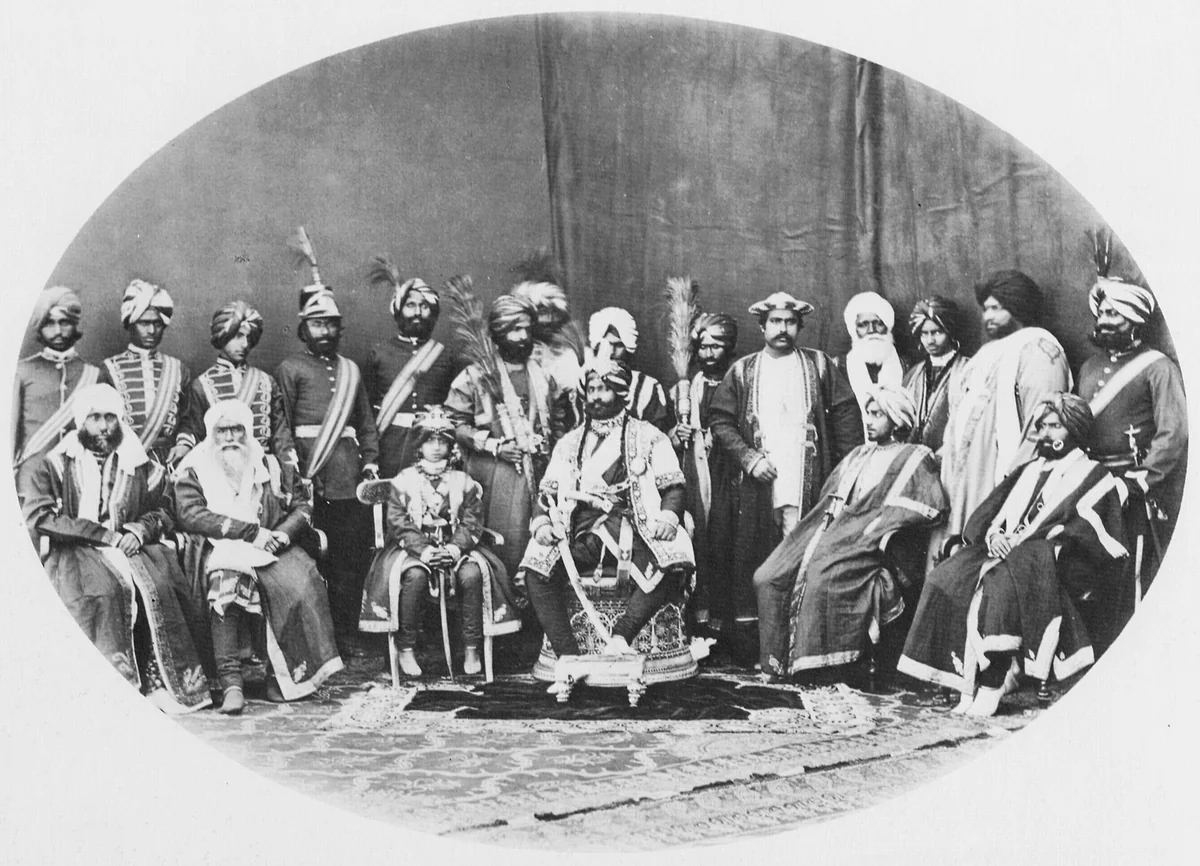
Kashmir’s own beginning is a full century older and even barer of consent: in 1846 the territory was sold, under the Treaty of Amritsar, to a Dogra ruler for 7.5 million rupees. A Muslim-majority population was transferred by a commercial transaction to which not one of its inhabitants was party. Every claim of consent made since has to be measured against that starting point.
Where this site stops short, and why
It is sometimes argued that Partition was designed so that Britain could eventually return and rule again. This site does not make that claim, because it cannot source it — and it does not need it. What the record supports is damaging enough: a border of that consequence drawn that fast, by that person, published after the fact, by a departing power concerned with its own residual influence.
The same discipline applies to Gurdaspur. Radcliffe awarded three of its four tehsils to India, which gave India its only land route into Kashmir through Pathankot; the district was about 47% Muslim. A substantial literature alleges Mountbatten intervened to secure that route. Indian scholars reply that Pathankot was Hindu–Sikh majority and would have gone to India on any tehsil-based reading, and that the final award closely tracked Wavell’s February 1946 demarcation plan. This site reports the allegation as an allegation and the rebuttal alongside it. A contested claim presented as settled is how a good case gets discredited.

5. Who benefits from it not ending
A conflict that lasts seventy-eight years is not a failure of problem-solving. It is a settlement that suits the people in a position to end it.
In Pakistan, the Kashmir cause has underwritten the primacy of the military in national life for three generations — and HRW’s findings above are what that primacy looks like when it is applied to Kashmiris themselves: the ISI organising thirteen militant groups into a single council in 1994, elected governments dismissible from Islamabad, torture without a single prosecution.[1] A state that treats the territory as a strategic asset is not a state acting on behalf of its inhabitants.
In India, the same dispute has underwritten a security state, a permanent emergency-powers regime, and an electorally profitable nationalism — the abrogation of Article 370 was presented as an achievement to a domestic audience, not as a settlement offered to Kashmiris.
Neither establishment pays the cost. The costs land on the people counted in this site’s files, and on the 96% of Srinagar residents who told an international survey that the main problem facing them was that there is no work.

The conclusion
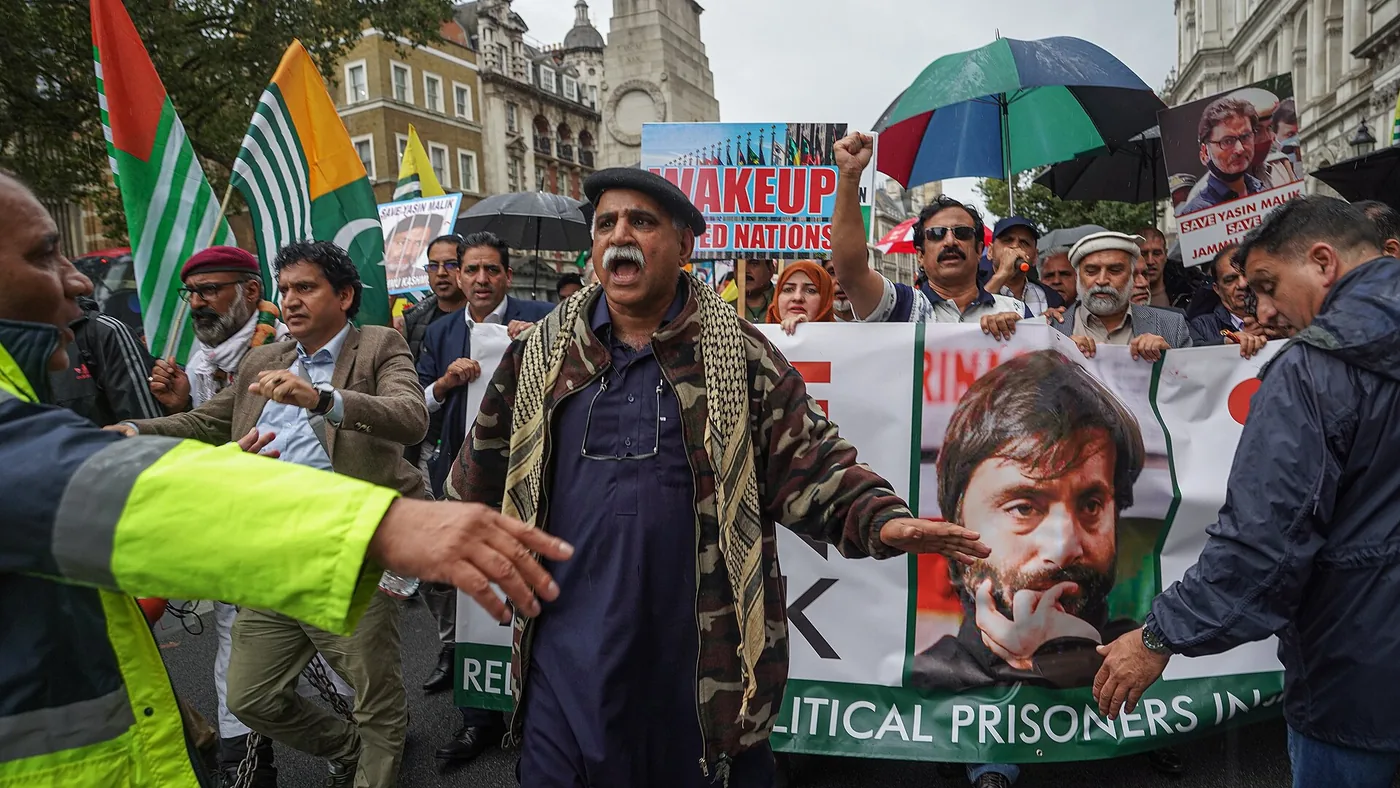
The people of Jammu and Kashmir are not the subject of this dispute. They are the terrain it is fought over. They were transferred by sale in 1846, allocated by a rushed line in 1947, promised a vote in 1948 that has never been held, and asked once, in 2009, by a foreign think-tank — at which point three-quarters to ninety-five per cent of the Kashmir Valley said it wanted neither of the states claiming it. The survey.
Both governments have committed grave acts. Both suppress the option their people actually want. Both have establishments that profit from the dispute continuing. And no objective offered by either of them — not water, not strategic depth, not territorial integrity, not religious solidarity, not electoral advantage — is worth what has been taken from the people who live there.
That is the whole argument of this site. Not that one state is good and the other evil. That a population of roughly fourteen million has been treated as terrain by everyone with the power to decide, for seventy-eight years, and is entitled to be asked.
Sources & notes
- Human Rights Watch, “With Friends Like These…”: Human Rights Violations in Azad Kashmir, 20 September 2006. Source for the Interim Constitution’s bar on propagating against accession; the required loyalty declaration; Section 56 and Islamabad’s power to dismiss an elected AJK government; the banning of books prejudicial to the ideology of accession; the finding of no prosecutions or disciplinary action against military, paramilitary or intelligence personnel for torture; the approximately 800 arrests around the 2001 elections; and the ISI’s organisation of thirteen militant groups into the Muttahida Jihad Council in 1994. hrw.org. The report is twenty years old; it is cited because it is the most detailed independent documentation of governance in Azad Kashmir that exists, and because OHCHR’s 2018 and 2019 reports reach consistent conclusions about restrictions on expression and association there. Discussed further on Hard Questions.
- On the Radcliffe Boundary Commission: the scale (roughly 175,000 square miles and 88 million people), the timetable, the submission of the award on 12 August 1947 and its withholding until 16 August, the “barrister following a brief” characterisation, and the scholarly emphasis on British efforts to retain influence during decolonisation. See Encyclopædia Britannica on the Radcliffe Line and the Boundary Commission; the LSE International History blog on the line’s legacy; and the scholarly literature on the commission and the partition of Punjab. On Gurdaspur: Radcliffe awarded the Gurdaspur, Batala and Pathankot tehsils to India and Shakargarh to Pakistan; the district was approximately 47% Muslim and 40% Hindu. The allegation of intervention by Mountbatten, and the counter-argument that Pathankot was Hindu–Sikh majority and that the award closely followed Wavell’s February 1946 plan, are both reported here without adjudication. This site holds no primary document on Gurdaspur and marks the question contested.