Home / History
History
One hundred and eighty years, in order
From a commercial transaction in 1846 to fourteen UN rapporteurs in 2025. The dates that made Kashmir the place it is — including the ones that are inconvenient for every party to the argument.
How to read this timeline. Entries marked with a red node are the ones that changed the situation structurally rather than incrementally. Where death tolls are disputed between sources, the dispute is stated rather than resolved — this site does not pick the highest available number.
Killings by armed groups, and the expulsion of the Kashmiri Pandits in 1990, appear here for the same reason everything else does: a record with holes in it is not a record.
.jpg)


- 184616 March 1846
Kashmir is sold
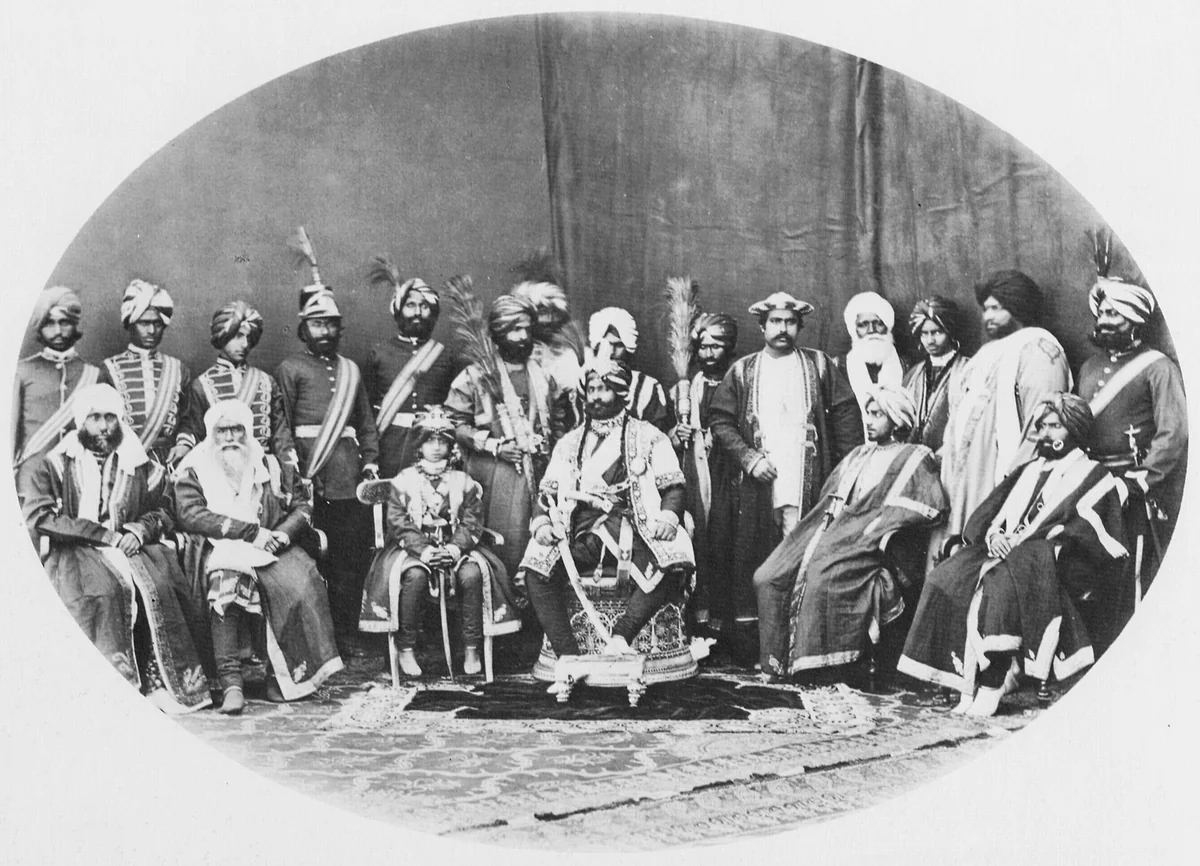
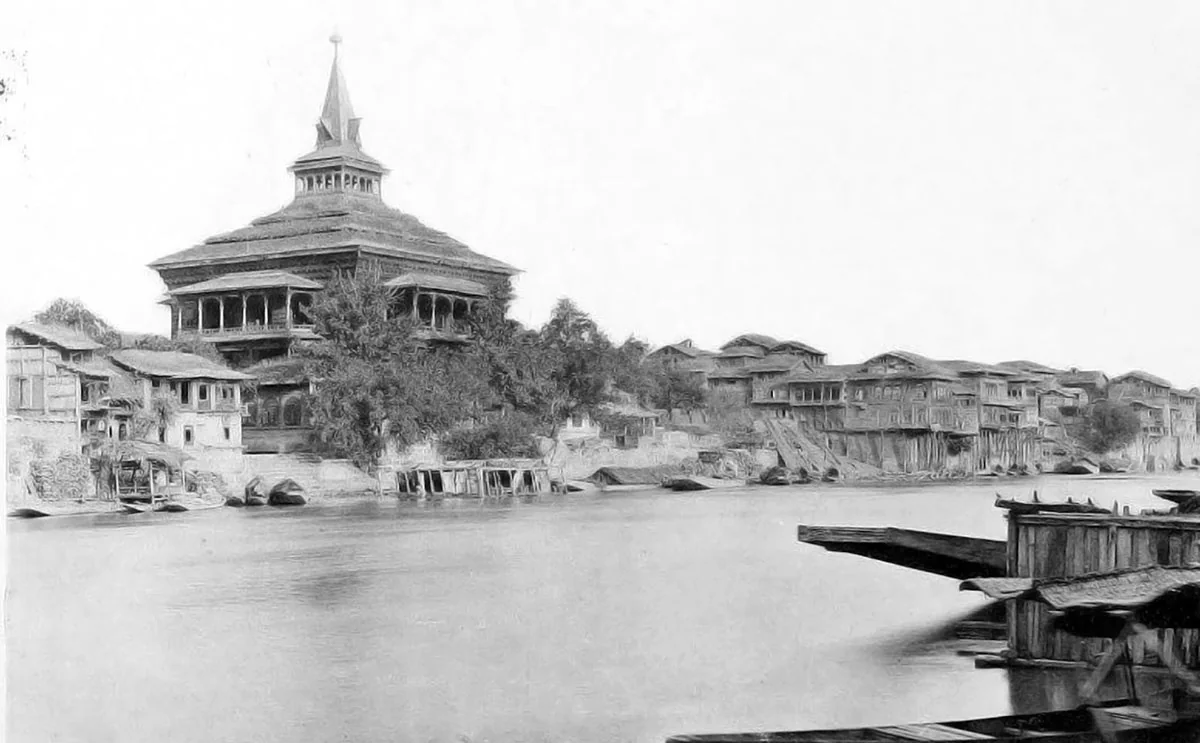
Under the Treaty of Amritsar, the British East India Company transfers the territory of Kashmir to Gulab Singh, the Dogra ruler of Jammu, for 7.5 million rupees. A Muslim-majority population passes to a Hindu dynasty by a commercial transaction to which none of its inhabitants is a party. Every subsequent claim of consent has to be measured against this beginning.
- 1846–1947
A century of Dogra rule
The princely state of Jammu and Kashmir takes shape under Dogra maharajas: Gulab Singh, Ranbir Singh, Pratap Singh, Hari Singh. The Muslim majority is largely excluded from landholding, senior state employment and higher education. Political organisation is suppressed.
- 193113 July 1931
Twenty-two killed at Srinagar Central Jail
Police fire on a crowd gathered outside the jail during the trial of Abdul Qadeer, killing twenty-two people. The date becomes Martyrs’ Day and marks the beginning of organised mass politics in Kashmir. In 2020 the Union Territory administration removed it from the official list of public holidays.
- 1947June–August 1947
Partition, and a state that does not choose
As British India is divided, the princely states are pressed to accede to India or Pakistan. Maharaja Hari Singh does neither, seeking independence and signing a Standstill Agreement with Pakistan. A rebellion breaks out in Poonch against Dogra rule.
- 194722–27 October 1947
Invasion, accession, war
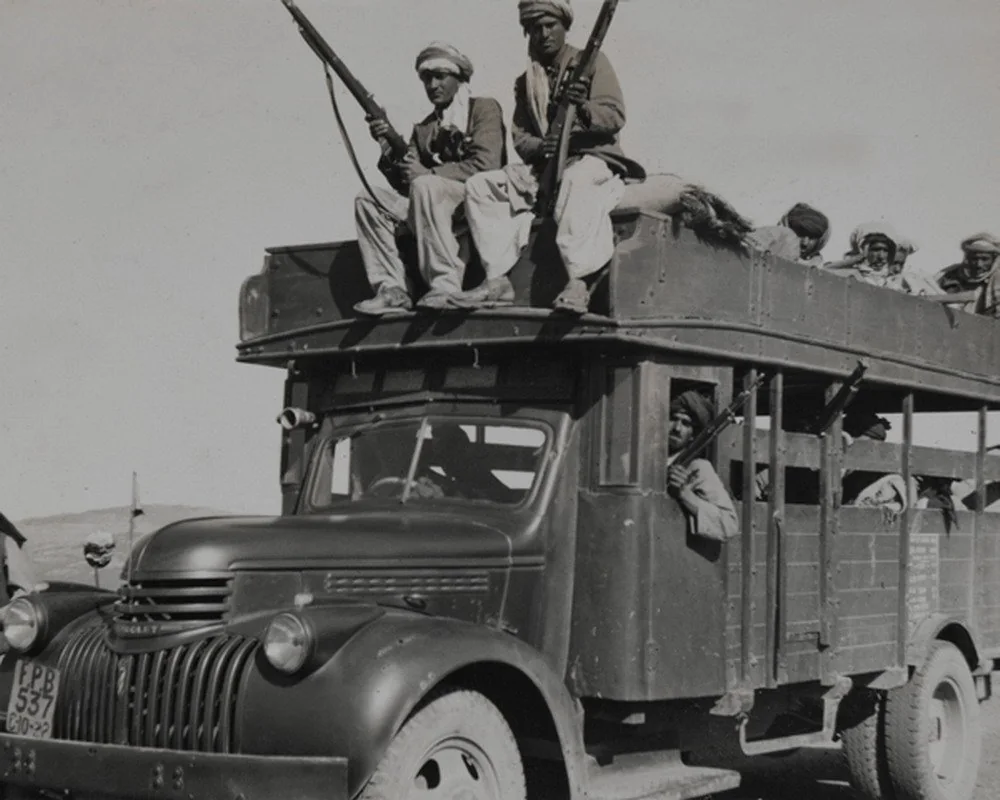
Armed tribesmen from Pakistan’s North-West Frontier cross into the state on 22 October. On 26 October Hari Singh signs the Instrument of Accession to India; Indian troops are airlifted to Srinagar on 27 October. India’s acceptance is accompanied by the undertaking that the question of accession would be settled by a reference to the people. The first India–Pakistan war begins.
- 19481 January 1948
India takes Kashmir to the Security Council
India refers the dispute to the United Nations Security Council under Article 35 of the Charter. Resolution 39 of 20 January establishes the United Nations Commission for India and Pakistan (UNCIP).
- 194821 April 1948
Resolution 47: a plebiscite
Security Council Resolution 47 sets out a three-part settlement: Pakistan to withdraw the fighters who entered the state, India to reduce its forces to the minimum required for law and order, and a plebiscite to be held under a Plebiscite Administrator nominated by the United Nations to determine the will of the people.[1] The plebiscite has never been held.
- 1948–4913 Aug 1948 & 5 Jan 1949
UNCIP: both states accept the principle
UNCIP adopts two resolutions amplifying Resolution 47. Both India and Pakistan accept them. The 5 January 1949 resolution states that the question of accession will be decided through a free and impartial plebiscite. A ceasefire takes effect on 1 January 1949.
- 194927 July 1949
The line on the map
The Karachi Agreement fixes the ceasefire line, dividing the territory into the parts administered by India and by Pakistan. It was intended as a temporary military line. It is still, in modified form, the line today.
- 194917 October 1949
Article 370
Article 370 is inserted into the Constitution of India, giving Jammu and Kashmir a special constitutional position: its own constitution, and a limitation on the Union Parliament’s power to legislate for it without the concurrence of the state.
- 19539 August 1953
The elected leader is dismissed and jailed
Sheikh Mohammad Abdullah, Prime Minister of Jammu and Kashmir and the region’s dominant political figure, is dismissed and arrested. He spends much of the next two decades in detention. The removal of the most popular Kashmiri leader by New Delhi’s hand is a wound that shapes everything after it.
- 195414 May 1954
Article 35A
A Presidential Order adds Article 35A, empowering the state legislature to define ‘permanent residents’ and reserve to them rights in land, employment and settlement. It becomes the legal shield around the demographic composition of the state — and the target of the 2019 changes.
- 195726 January 1957
The state’s own constitution
The Constitution of Jammu and Kashmir comes into force. India regards the accession as final; Pakistan and the UN resolutions treat the question as open.
- 1965
The second war
War again between India and Pakistan, substantially over Kashmir. Ends with the Tashkent Declaration of January 1966. The Security Council’s last substantive engagement with the dispute for decades.
- 1971–722 July 1972
Simla, and the Line of Control
After the 1971 war and the creation of Bangladesh, the Simla Agreement renames the ceasefire line the Line of Control and commits both states to settle differences bilaterally. India reads Simla as superseding the UN framework; Pakistan does not. The people of the territory are not party to it.
- 1975February 1975
The Indira–Sheikh Accord
Sheikh Abdullah returns to office having set aside the demand for a plebiscite. To many Kashmiris the accord reads as the surrender of the central political claim in exchange for office.
- 1987March 1987
The election that broke the ballot box
The Assembly election, contested by the Muslim United Front against the National Conference–Congress alliance, is very widely held to have been rigged. Opposition candidates and workers are arrested. For a generation of Kashmiris the lesson drawn is that the electoral route is closed. Several men involved in that campaign take up arms.
- 1988–89
Armed insurgency begins
Militant organisations, foremost the Jammu and Kashmir Liberation Front, launch an armed campaign. In December 1989 the kidnapping of Rubaiya Sayeed, daughter of the Union Home Minister, and the release of prisoners in exchange, marks a turning point.
- 199019–21 January 1990
Governor’s rule, and the Gawkadal killings
Jagmohan is appointed Governor; the state government resigns. On 21 January, Central Reserve Police Force personnel open fire on a protest march at the Gawkadal bridge in Srinagar. Reported death tolls vary widely between accounts, from around fifty upwards; it is commonly described as the largest single killing of protesters in the conflict. No one has been prosecuted.[2]
- 1990Spring 1990
The Kashmiri Pandits are driven out
Targeted killings, threats and an intimidation campaign by armed groups drive the great majority of the Kashmiri Pandit community — the valley’s Hindu minority — from their homes. Most have never returned. It is a grave crime against a civilian population and it belongs in this record. This site addresses it directly here.
- 19901 March & 21 May 1990
Zakoora, Tengpora, and a funeral procession
Security forces fire on marches at Zakoora crossing and Tengpora bypass in Srinagar. On 21 May, following the assassination of Srinagar’s religious leader Maulvi Mohammed Farooq, Central Reserve Police Force personnel open fire on the funeral procession. Amnesty International records at least forty-seven people arbitrarily killed.[3]
- 1990July 1990
AFSPA arrives
The Armed Forces (Jammu and Kashmir) Special Powers Act comes into force. Section 4 permits the use of lethal force; Section 7 bars the prosecution of armed forces personnel without prior sanction from the Government of India. That sanction becomes the hinge on which impunity turns. How Section 7 works →
- 199123 February 1991
Kunan Poshpora
During a search operation in the twin villages of Kunan and Poshpora, Kupwara district, soldiers of the 4 Rajputana Rifles gang-rape around twenty-three women, according to survivors and to the Deputy Commissioner of Kupwara, whose official report records that army personnel committed multiple rapes. The Army and the Government of India deny it. A three-member Press Council of India panel — invited by the Army, composed of journalists, and with no legal standing — visits for two days in June and pronounces the allegations ‘baseless’. By October the police have stopped investigating, declaring the case ‘untraceable’.[11] The case in full →
- 199213 April 1992
Sopore, first time
Border Security Force personnel enter houses in Sopore and shoot thirteen civilians dead, some four hours after militants had fired on a BSF position. Amnesty International documents the killings.[3]
- 19936 January 1993
Sopore burns
BSF personnel go on what Amnesty International describes as a rampage through Sopore, setting fire to houses, looting shops and killing at least fifty-three men and women. Amnesty published a dedicated case study of the killings three months later.[3] No one has been convicted.
- 199322 October 1993
Bijbehara
Security forces fire on a protest march in Bijbehara. Reported tolls vary between accounts, commonly given as between thirty-seven and fifty-one dead, a large proportion of them students. Thirty years on, no accused has been punished.[2]
- 1993October 1993
Hazratbal
A siege at the Hazratbal shrine in Srinagar. Firing on a related protest at Bijbehara follows.
- 1995May 1995
Charar-e-Sharief
The shrine of Sheikh Noor-ud-din Noorani at Charar-e-Sharief and much of the surrounding town are destroyed during a siege. Responsibility is disputed between the Indian forces and the militants inside.
- 1999May–July 1999
Kargil
Pakistani forces and militants occupy positions on the Indian side of the Line of Control in the Kargil sector. India retakes them at heavy cost. The first conflict between the two states after both had tested nuclear weapons.
- 2000March 2000
Chittisinghpura and Pathribal
Thirty-five Sikh villagers are massacred at Chittisinghpura on the eve of a US presidential visit. Days later security forces kill five men at Pathribal and present them as the perpetrators; a CBI investigation later concluded the Pathribal killings were staged. Proceedings against the accused soldiers were closed after the Army declined sanction. It is the clearest single illustration of what Section 7 does.
- 2008June–August 2008
The Amarnath land agitation
A decision to transfer land to the Amarnath shrine board triggers mass protests across the valley and counter-protests in Jammu. Security forces kill dozens of protesters. A new, largely unarmed mass protest politics emerges.
- 2010Summer 2010
The stone-pelting summer
Following the exposure of the Machil fake encounter — in which soldiers killed three labourers and presented them as infiltrators — months of protest are met with lethal force. More than a hundred people, many of them teenagers, are killed.
- 201116 April & 2 July 2011
The graves are confirmed
On 16 April the Jammu and Kashmir State Human Rights Commission confirms the existence of 2,730 graves, recommending forensic examination, DNA testing and a Commission of Inquiry; none of the three is implemented. On 2 July the Commission’s police investigation team submits its Enquiry Report of Unmarked Graves in north Kashmir; in the United Nations’ summary of it, the SHRC “identified 574 bodies out of 2,156 bodies”. The dead had been buried as unidentified infiltrators. At least 574 were local.[10] The graves →
- 20139 February 2013
Afzal Guru is hanged
Mohammad Afzal Guru is executed in Tihar jail over the 2001 Parliament attack and buried in the prison grounds; his family is not informed in time to see him. The Supreme Court had written that the collective conscience of society would only be satisfied by capital punishment. The execution and secret burial become a lasting grievance.
- 20168 July 2016
Burhan Wani, and the blinding
The killing of the militant commander Burhan Wani triggers the largest uprising in years. Security forces respond with pellet-firing shotguns. Between mid-2016 and the end of 2018, Srinagar’s main hospital records 1,253 people blinded by metal pellets.[4] The weapon →
- 201814 June 2018
The first UN report
OHCHR publishes the first United Nations human rights report on Kashmir, covering June 2016 to April 2018, and calls for the Human Rights Council to consider establishing an international commission of inquiry. India rejects it. The coalition government in Srinagar collapses that month and direct rule follows.
- 201914 February 2019
Pulwama
A vehicle-borne improvised explosive device strikes a convoy at Pulwama, killing forty personnel of the Central Reserve Police Force.[5] India carries out air strikes at Balakot on 26 February; an aerial engagement follows. Kashmiri students and traders elsewhere in India face reprisals.
- 20198 July 2019
The second UN report
OHCHR publishes its update covering May 2018 to April 2019, finding that neither state had acted on its recommendations, and recording that in nearly three decades of AFSPA not a single prosecution of armed forces personnel had been sanctioned.[6]
- 20195 August 2019
Article 370 is read out of existence
Constitutional Order 272 alters how Article 367 is to be read so as to change the operation of Article 370; Order 273 gives effect to the abrogation. It is done while the territory is under direct rule, its political leadership detained, and all communications cut. The legal mechanism, step by step →
- 20199 August 2019
The state is dissolved
Parliament passes the Jammu and Kashmir Reorganisation Act, splitting the state into two Union Territories — Jammu & Kashmir, and Ladakh. A state of the Indian Union is downgraded to centrally administered territory. On 16 August the Security Council holds closed consultations on Kashmir, its first in decades.
- 2019–215 Aug 2019 – 5 Feb 2021
The longest blackout a democracy has imposed
All communications are severed: landlines, mobile networks and internet. The region experiences 213 days with no internet and some 550 days of partial or no connectivity — the longest shutdown then imposed by any democracy. 4G is restored on 5 February 2021, roughly eighteen months later.[13] The blackout →
- 2020March & October 2020
Who may belong, who may buy
New domicile rules replace the permanent-resident regime protected by Article 35A, opening domicile certificates — and with them land and job rights — to categories of non-residents. In October, land laws are amended to remove restrictions on the purchase of land by non-residents. Changing the map →
- 202122 November 2021
The documenters are arrested
Khurram Parvez, coordinator of the Jammu Kashmir Coalition of Civil Society and the man most responsible for the torture and mass-graves documentation this site relies on, is arrested by the National Investigation Agency under the UAPA. The journalist Irfan Mehraj is arrested in March 2023. Both are held for years without charges being framed.
- 2022May 2022
Redrawing the constituencies
The Delimitation Commission’s final order redraws Assembly seats, adding six to the Jammu region and one to the Kashmir valley — a shift critics argue alters the electoral arithmetic against the Kashmir valley’s majority.
- 2023August 2023
The Kashmir Walla is shut
The news outlet The Kashmir Walla, whose editor Fahad Shah had been jailed for 658 days, is blocked. Independent Kashmiri journalism is progressively closed down. The press →
- 202311 December 2023
The Supreme Court upholds it
A five-judge Constitution Bench unanimously upholds the abrogation, holding Article 370 a ‘temporary provision’ and Orders 272 and 273 lawful. It also directs that statehood be restored and elections held. The judgment →
- 2024October 2024
An election, without a state
The first Assembly elections in a decade. The National Conference–Congress alliance wins a decisive mandate and Omar Abdullah becomes Chief Minister. On 17 October the new cabinet’s first act is a resolution asking the Union Government to restore statehood ‘in its original form’. Jammu and Kashmir remains a Union Territory, with a Lieutenant Governor appointed from Delhi holding substantial powers.
- 202522 April 2025
Pahalgam
Gunmen kill twenty-six people, most of them Hindu tourists, at Pahalgam. Witnesses report the victims were identified by religion before being shot. A four-day armed conflict between India and Pakistan follows; India names its campaign Operation Sindoor. Casualty claims from those four days are contested and state-sourced on both sides.[7]
- 2025April–September 2025
2,800 detained
Sweeping operations across Jammu and Kashmir result in the arrest and detention of around 2,800 people, including journalists and human rights defenders, under the Public Safety Act and the UAPA. Homes are demolished without court orders. Around 8,000 social media accounts are blocked. In August, twenty-five books are banned and bookshops raided for publications said to ‘excite secessionism’.[8]
- 202524 November 2025
Fourteen UN experts
Fourteen United Nations special-procedure mandate holders issue a joint statement condemning the Pahalgam attack unequivocally and then setting out the violations that followed: arbitrary arrests, suspicious deaths in custody, torture, lynchings, punitive demolitions amounting to collective punishment, and disproportionate restrictions on expression. They call for the immediate unconditional release of all those arbitrarily detained.[8] The international record →
- 202610 June – 23 July 2026
Released, but not free to go home
The Delhi High Court grants Khurram Parvez bail on 10 June 2026, after four years and seven months in custody without his trial reaching the framing of charges, holding that such prolonged incarceration with no prospect of an early conclusion justified release despite the UAPA’s bail bar. Irfan Mehraj is granted bail on 18 July. Both are released on 23 July 2026 — required to remain in Delhi for trial, and barred from travelling to Kashmir.[9]
- 2026September 2026
Where the record stands
Jammu and Kashmir has an elected government and no statehood. Article 370 is gone and judicially confirmed gone. The unmarked graves of north Kashmir have not been exhumed or identified. As at the United Nations’ most recent assessment of the question, the Government of India had never granted sanction to prosecute a member of the armed forces for a human rights violation in the territory, and no sanction has been publicly reported since.[12] The plebiscite the Security Council called for in 1948 has not been held.
Sources & notes
- UN Security Council Resolution 47 (1948), adopted 21 April 1948. Full text: unscr.com/en/resolutions/47; UN Digital Library record 280500.
- Contested figure. Reported death tolls for the Gawkadal (21 January 1990) and Bijbehara (22 October 1993) killings differ substantially between contemporaneous reporting, human rights organisations and official accounts. This site states the range rather than selecting a figure, and is seeking a primary document for each. If you hold one, please send it.
- Amnesty International, India — Sopore: a case study of extrajudicial killings in Jammu and Kashmir, April 1993, AI Index ASA 20/17/93. The report documents the killing of at least 53 people at Sopore on 6 January 1993 by the Border Security Force, and records the 21 May 1990 killing of at least 47 people at the funeral procession of Maulvi Mohammed Farooq by the CRPF, and the killing of 13 civilians at Sopore on 13 April 1992.
- Shri Maharaja Hari Singh Hospital, Srinagar, as reported in UN OHCHR, Update, 8 July 2019, para. 10.
- UN OHCHR, Update, 8 July 2019, para. 6.
- UN OHCHR, Update, 8 July 2019, para. 13.
- UN OHCHR Special Procedures, 24 November 2025; Human Rights Watch, World Report 2026, India chapter. Casualty claims arising from the four-day exchange are asserted by the two governments and are not independently verified.
- UN OHCHR Special Procedures, UN experts alarmed by Indian counter-terrorism operations violating human rights in Jammu and Kashmir, 24 November 2025; Human Rights Watch, World Report 2026, India chapter, on the banning of 25 books and raids on bookshops.
- Delhi High Court order of 10 June 2026 granting bail to Khurram Parvez; order of 18 July 2026 granting bail to Irfan Mehraj; both released 23 July 2026. See also UN Working Group on Arbitrary Detention, Opinion A/HRC/WGAD/2023/8, on Khurram Parvez’s detention. Live legal matter — status stated as at September 2026.
- The 2,730 figure is a count of graves confirmed by the J&K State Human Rights Commission on 16 April 2011, recorded by FIDH (Kashmir briefing note, 15 March 2019) and JKCCS (Annual Human Rights Review 2019), together with the SHRC’s recommendations for forensic examination, DNA testing and a Commission of Inquiry — none of which were implemented. The 574-of-2,156 figure is UN OHCHR’s summary (14 June 2018) of the SHRC’s separate north Kashmir enquiry, Enquiry Report of Unmarked Graves in north Kashmir (SHRC/PIW/2011/1000, 2 July 2011). These are two distinct findings and this site does not merge them; a third order, of 24 October 2017, concerns Poonch and Rajouri in the Jammu division. All three are set out in File 03.
- UN OHCHR, 14 June 2018, paras. 129–131 and footnotes. Source for the 4 Rajputana Rifles, the figure of around 23 women, the official report of the Deputy Commissioner of Kupwara, the denial by the Army and the Government of India, the three-member Press Council of India commission that visited on 8–9 June 1991 and whose investigation OHCHR records as having “no legal standing”, and the Jammu and Kashmir Police declaring the case “untraceable” and stopping investigations by October 1991. File 07.
- UN OHCHR, Update, 8 July 2019, para. 13, which covers “nearly three decades” of AFSPA to the date of that report. This site does not claim to know what has happened since July 2019 beyond the absence of any publicly reported sanction; the claim is stated to the limit of its source and no further. If a sanction has been granted since, tell us and it will be recorded.
- Internet Society Pulse and the internetshutdowns.in tracker maintained by the Software Freedom Law Centre, India, record 213 days with no internet and approximately 550 days of partial or no connectivity following 5 August 2019, the longest shutdown then imposed by a democratic state; 4G was restored on 5 February 2021. See also Human Rights Watch, “No Internet Means No Work, No Pay, No Food”, 14 June 2023, and, on the pre-2019 pattern, UN OHCHR, Update, 8 July 2019, para. 14.