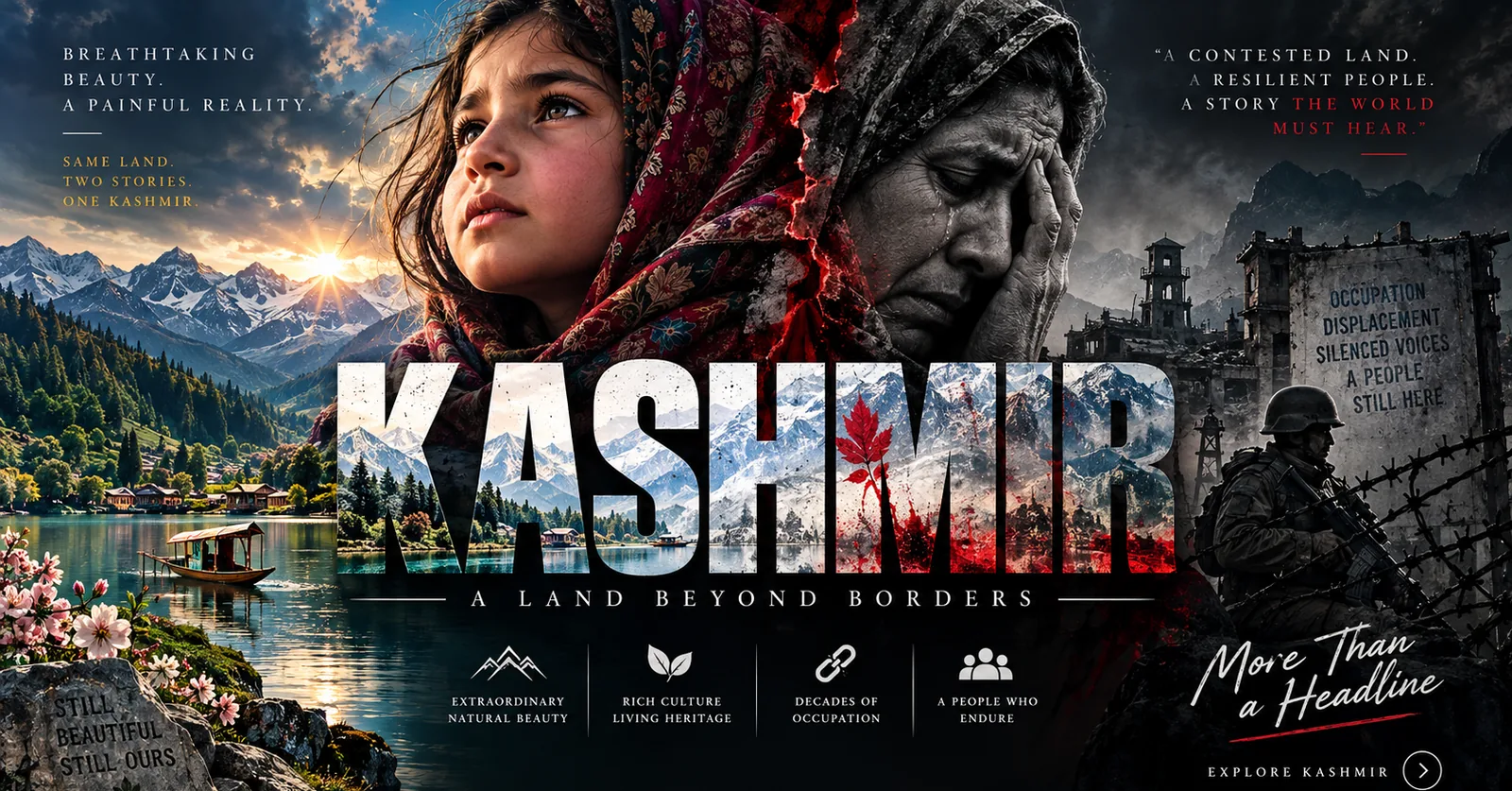
A humanitarian record
Kashmir is occupied, and the people who live there are paying for other people’s ambitions.
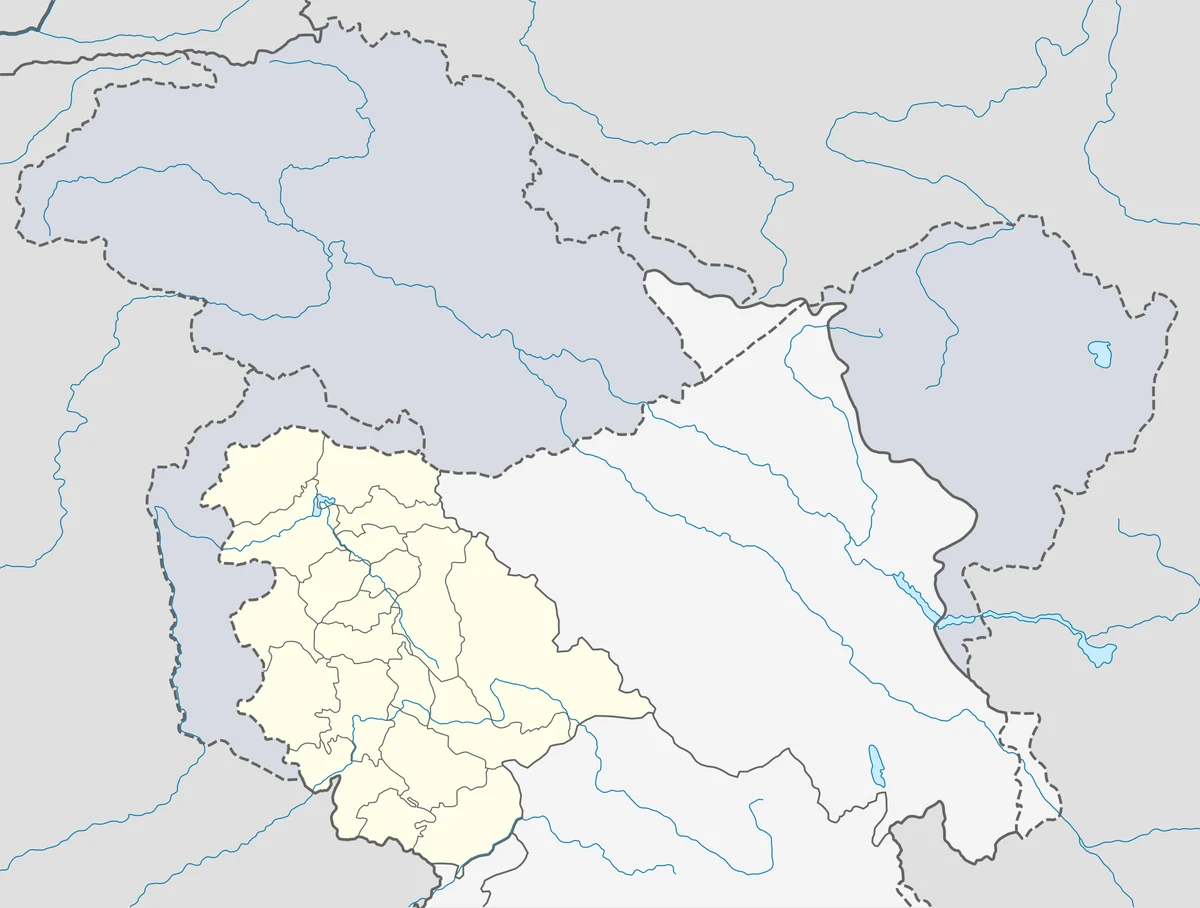
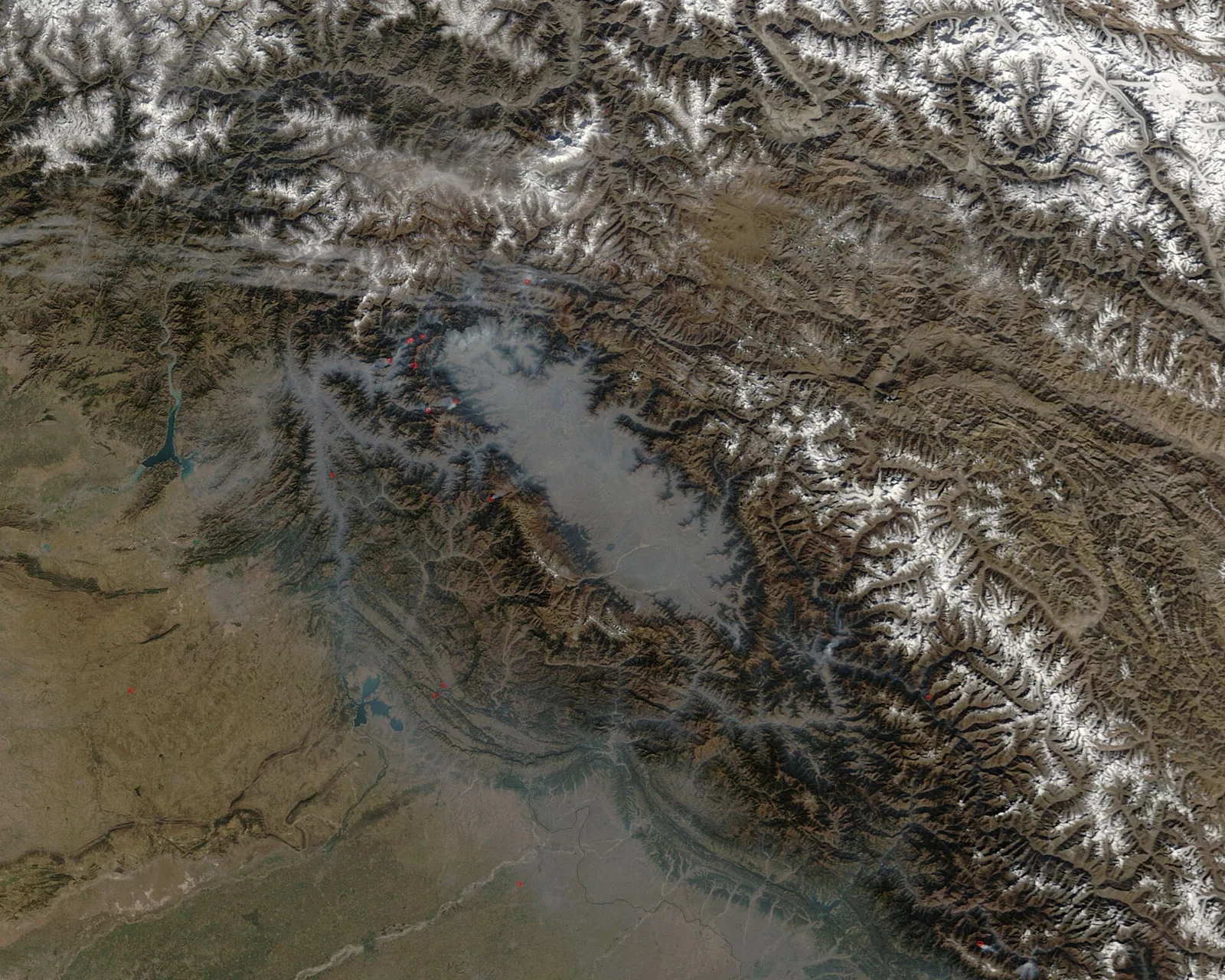
Two states have contested this territory for seventy-eight years. Neither has ever asked its inhabitants what they want. When somebody finally did, in the only serious survey ever taken on both sides of the Line of Control, between 74% and 95% of people in the Kashmir Valley said they wanted to belong to neither of them.[1]
This site exists to inform. It documents what has been done in Jammu and Kashmir, by whoever did it, from sources you can check yourself. It does not argue that any of it was justified — not by either side, not by anything. No political objective is worth a single one of these deaths.
Where this site stands
The land is occupied. That is the word the scholarship uses — Hafsa Kanjwal’s Colonizing Kashmir: State-building under Indian Occupation (Stanford, 2023), Duschinski and others’ Resisting Occupation in Kashmir (Pennsylvania, 2018), Ather Zia’s Military Occupation and Women’s Activism in Kashmir (Washington, 2019). The International People’s Tribunal analyses its case files “within the context of an occupation”. The library.
Both states have committed grave acts, and documenting them is not the same as balancing them. This site records killings by armed groups, the Pahalgam attack of April 2025, Pulwama in 2019, the expulsion of the Kashmiri Pandits in 1990, and what the United Nations has said about the part of Kashmir administered by Pakistan. It records them because a record with holes is not a record. It records them without accepting that any of it licenses an occupation, or excuses what has been done under one. The hard questions.
Nothing here justifies war. Not on either side. Measured against the loss of life in this region, no reasoning offered by anyone — strategic, legal, historical, religious — comes close to sufficing. A single death is not worth a political ambition.
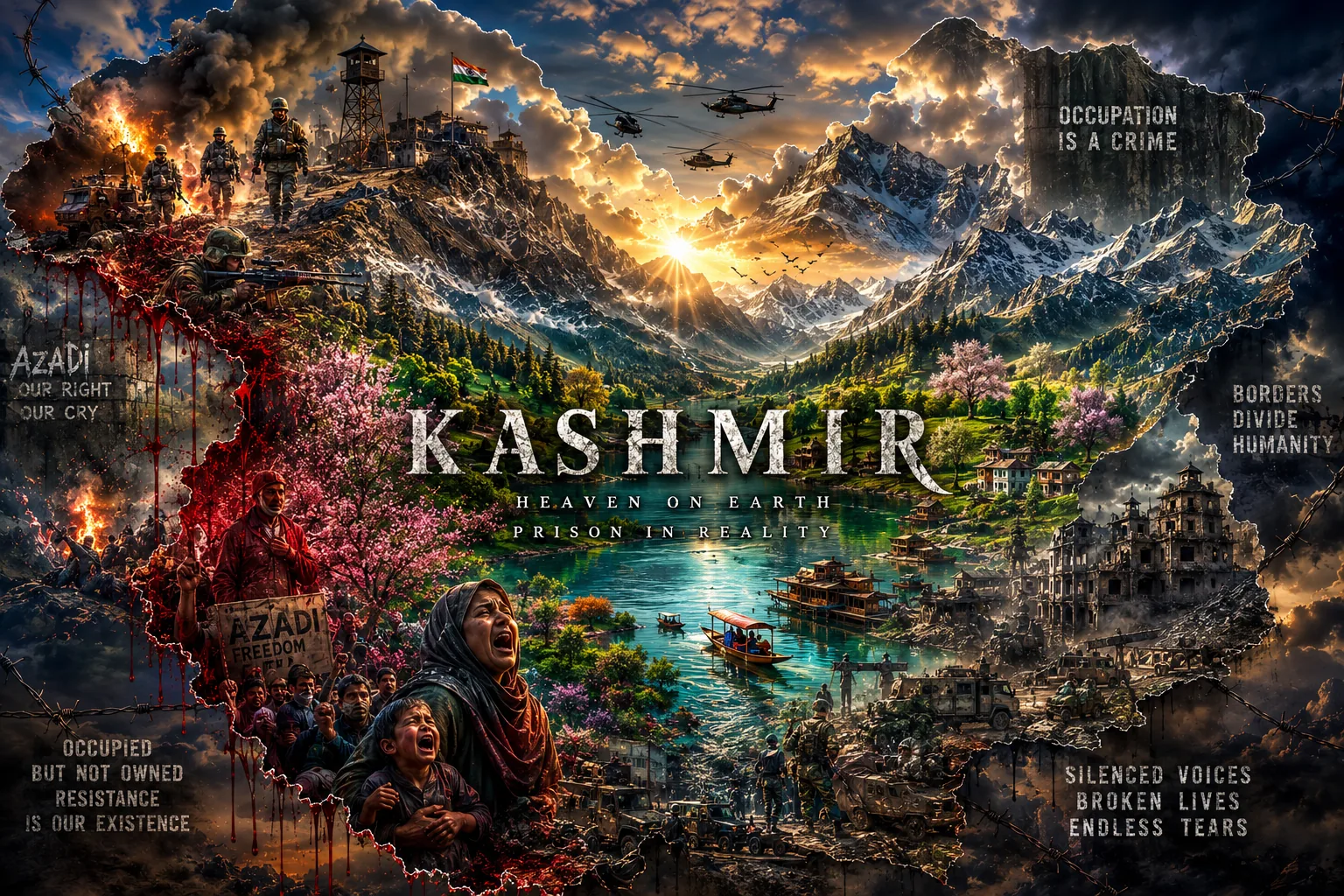
And this is a plea, not only a file. Kashmir would be one of the most beautiful places on earth to live in and to visit. Instead it has been a battleground for three generations, set back decades, its people unemployed, surveilled, bereaved and unasked. The request this site makes of a reader is simply that they not look away from a region the world has found it convenient to ignore.

What Kashmiris said when somebody finally asked
.jpg)
Why this site prints two sets of numbers
Almost everything written about Kashmir online asks you to take a number on faith. This site does not. Where the Government of India and Kashmiri civil society count differently, both counts appear, side by side, attributed.
Here is 2018, the year the United Nations described as having the highest number of conflict-related casualties since 2008. These two rows come from the same paragraph of the same UN report:[2]
| Counted by | Civilians | Militants | Security forces | Total |
|---|---|---|---|---|
| JKCCS | ~160 | 267 | 159 | 586 |
| Ministry of Home Affairs | 37 | 238 | 86 |
The gap is not a rounding error. On civilian deaths the two figures differ by more than four times. That gap is the story: a state that administers a territory under emergency powers, counting the dead very differently from the people who live there, with no independent body permitted to settle the question. The United Nations has asked to be let in to do exactly that. Neither India nor Pakistan has agreed.[3]
So this site takes the only defensible position available: publish both, name both, and let the reader see the distance between them.
What the United Nations said, most recently
On 24 November 2025, fourteen United Nations special-procedure mandate holders — independent experts appointed by the Human Rights Council, including the Special Rapporteurs on torture, on extrajudicial executions, on human rights defenders, and the entire Working Group on Enforced or Involuntary Disappearances — issued a joint statement on Jammu and Kashmir.[4]
They began by condemning the killing of twenty-six people at Pahalgam in April 2025:
We unequivocally condemn the brutal terrorist attack on a tourist area and extend our condolences to the victims, their families, and the Government of India. However, all governments must respect international human rights law while combating terrorism.
UN Special Procedures, 24 November 2025
Then they set out what followed. Around 2,800 people arrested and detained, among them journalists and human rights defenders. Around 8,000 social media accounts blocked. Punitive house demolitions carried out without court orders, which the experts said “constitute collective punishment” and defy India’s own Supreme Court. And this:
We condemn reports of arbitrary arrests and detentions, suspicious deaths in custody, torture and other ill-treatment, lynchings, and discriminatory treatment of Kashmiri and Muslim communities.
UN Special Procedures, 24 November 2025
That is not a pamphlet. That is fourteen UN mandate holders, named, on the record, ten months ago.
The dossier
- Zeroprosecutions sanctioned under AFSPA in 36 yearsImpunity
Section 7 of the Armed Forces (Jammu and Kashmir) Special Powers Act requires the central government’s permission before a soldier can be prosecuted. On the UN’s most recent assessment it had never once been given. Everything else in this dossier is downstream of that.
- 432case studies of torture, of which 301 victims were civiliansTorture
The 550-page APDP/JKCCS archive: 49 people died during or after torture, 222 were left with lasting health problems, and only 27 of the 432 cases ever reached a human rights commission.
- 8,000–10,000men estimated disappeared since 1990The disappeared
APDP’s estimate, named as theirs. Alongside it, an Indian state institution’s own findings: 2,730 graves confirmed, and 574 of 2,156 bodies examined in north Kashmir identified as local Kashmiris.
- 1,253people blinded in thirty monthsPellet shotguns
A weapon classed as non-lethal and deployed for crowd control. The figure is a Srinagar hospital’s own caseload, reported by the UN — and it counts only those who lost their sight.
- ~2,800detained after the April 2025 Pahalgam attackDetention without trial
Administrative detention without charge under the Public Safety Act, and years in custody under the UAPA before charges are framed. Fresh orders are issued before a court’s release can take effect.
- 4.3×the gap between two counts of the same year’s civilian deadKillings
JKCCS counted about 160 civilians killed in 2018; India’s Home Ministry counted 37. Both figures appear in the same paragraph of the same UN report. Plus the massacres that produced no convictions.
- 213days with no internet at allThe blackout
The longest shutdown then imposed by any democracy, beginning the day Article 370 was removed. The people whose constitutional status was being altered could not telephone a relative or reach a lawyer.
- ~23women gang-raped at Kunan Poshpora, February 1991Sexual violence
Closed within eight months by a two-day panel of journalists with, as the UN records, no legal standing. Thirty-five years on, nobody has been tried.
- 25books banned and bookshops raided, August 2025The press
Journalists held 658 days and 2,010 days without conviction; 8,000 social media accounts blocked; and the website of the organisation that documented all of this no longer resolves.
- 45%of adults showing symptoms of significant mental distressMental health
Nearly 1.8 million people, measured by Médecins Sans Frontières across 5,600 households. 19% show symptoms of probable PTSD. This is what the other ten files did to everyone else.
- 35Athe constitutional article that locked who could own land and claim residence — removedChanging the map
New domicile rules and amended land laws rewrote who may claim residence and buy land — and punitive demolitions, which the UN calls collective punishment, displace families one household at a time.
The library
Books, reports and film
An annotated bibliography — from Alastair Lamb and Sumantra Bose to the 550-page torture report and the films India has tried to suppress.
Reference directory
Every organisation, archive, tracker and primary document this site relies on, linked and checked.
Send us your work
Essays, reportage, poetry, art, photography, testimony, translation. Reviewed by a human before anything goes live.
Read the page we would rather not have written
An advocacy site that only prints what helps its case is not a reference. It is a leaflet, and it will be dismissed in a week. So this site keeps a page for the strongest arguments against its own position: the flight of the Kashmiri Pandits in 1990, killings by armed groups, and what the United Nations has said about the part of Kashmir administered by Pakistan.
Sources & notes
- Robert W. Bradnock, Kashmir: Paths to Peace, Chatham House (Royal Institute of International Affairs), May 2010, Table 6. 3,774 face-to-face interviews conducted 17 September – 28 October 2009 on both sides of the Line of Control — 2,374 in 11 districts of Indian-administered Jammu and Kashmir and 1,400 in 7 districts of Azad Jammu and Kashmir. Support for independence for the whole of Kashmir: Baramula 95%, Srinagar 82%, Badgam 75%, Anantnag 74%. Support for joining Pakistan across Indian-administered J&K: 2%. Support for joining India: 28%, concentrated outside the Kashmir Valley. Stated honestly: independence is the most popular single option but not a territory-wide majority — it exceeds 50% in only four districts, all in the Valley, and runs at 1% or less in five others. The survey is fifteen years old and used quota sampling; no government has permitted a comparable one since. The full findings, limitations included.
- OHCHR, 8 July 2019, para. 7. The JKCCS figures and the Ministry of Home Affairs figures appear in the same paragraph of the report. JKCCS is the Jammu and Kashmir Coalition of Civil Society, a Srinagar-based human rights organisation; its figures are its own and are attributed as such.
- OHCHR, 8 July 2019, para. 3: neither India nor Pakistan had taken concrete steps towards providing OHCHR with unconditional access to their respective sides of the Line of Control. The 2018 report had urged the Human Rights Council to consider establishing an international commission of inquiry.
- UN OHCHR, UN experts alarmed by Indian counter-terrorism operations violating human rights in Jammu and Kashmir, press release of the Special Procedures, 24 November 2025. ohchr.org. Special Rapporteurs and Working Group members are independent experts appointed by the Human Rights Council; they are not UN staff and their views are their own.